Skin Resurfacing – Refresh
Reveal fresher, clearer, more radiant skin with professional chemical peels tailored to your skin’s needs. Designed to exfoliate dead skin cells and stimulate renewal, our peels help improve tone, texture and clarity across areas such as the face, neck, décolletage, hands and back.
Skin Refresh
Chemical peels are a well-established treatment for concerns including pigmentation, acne, congestion, fine lines and scarring. When combined with the right homecare, a course of peels can deliver visible, lasting improvement in skin quality.
Our Peel Treatments
We offer a range of peels, from gentle glow-boosters to deeper corrective treatments. Your clinician will recommend the most appropriate option based on your skin, goals and downtime preferences.
Radiance Peel
A light peel from the Obagi range, designed to target a number of skin complaints. Clogged pores, dull, lacklustre skin and even breakouts can be reduced with a course of Radiance peels. Suitable for most skin types and very minimal downtime (1-2 days of lightly flaking skin). Best performed the week before a big event for your glowiest skin yet.
Glycolic Peel
Glycolic acid is an alpha-hydroxy acid, and useful for gentle exfoliation, to remove dead skin cells, target pigmentation and leave skin hydrated, fresh and glowing.
Radiant 20/10 Peel
A mix of salicylic and glycolic acid, this peel is great for acne prone and congested skin. Salicylic acid is a beta-hydroxy acid, and is able to penetrate oil and help clear blocked pores.
A course of treatment is recommended to help improve acne and congestion, along with an appropriate home care routine.
Glow Peel
One of Alumier MD’s top professional products, this peel packs a punch. It frequently requires some skin prep, and can be hyper-customised to include, brightening, and hydration, or add a vitamin A shot for maximum anti-ageing.
Blue Peel
Obagi’s first-class peel can target significant pigmentation and sun-damaged skin. This is a deep peel, and requires weeks of skin preparation and 7-10 days of downtime. The transformative results are worth the commitment associated with this chemical peel.
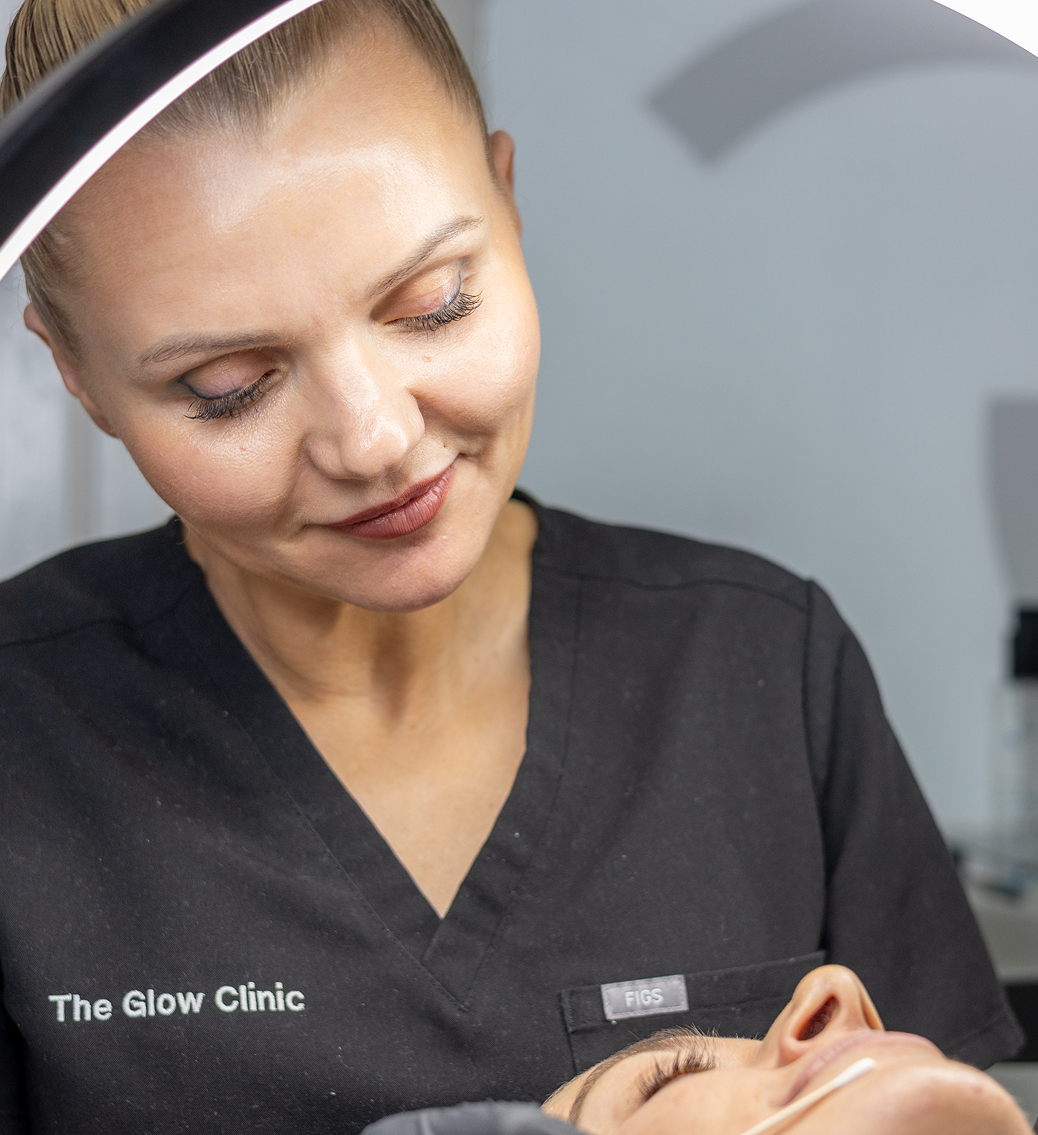
We’re here to listen, guide and support you every step of the way. Whether you’re focused on prevention or deeper correction, your glow starts with a single step.
THE GLOW CLINIC
Frequently asked questions about chemical peels
Chemical peels are made of different acids that have different effects on the skin. If you have ever used an “exfoliating toner” or glycolic face wash, you’ve already used a much lighter version of a chemical peel (and lived to tell the tale). Glycolic acid helps skin cells exfoliate off, salicylic acid can penetrate your pores and help clear out congestion, and lactic acid is a gentle one that both hydrates and exfoliates - to simplify it a little bit. Different strengths and combinations can be tailored exactly to your skin to specifically target what is bothering you, whether that is congestion, pigmentation, rosacea, acne or dyrness or you’d just like more of a glow!
Skincare products that contain retinol (or any form of retinoid, tretinoin, or vitamin A) should be avoided for 3-7 days prior to some of the deeper peels. Sunburnt or very sensitive skin may not be suitable either, but this can be assessed during your consultation. Acne or a sudden breakout will not prevent you having a peel, as peels form part of our Clear Skin Programme .
It takes a week and sometimes longer (depending on the strength and depth of your peel) to really see your glow factor increase. About 48 hours after your treatment, your skin will feel dry, and may start to flake. This can take a few days to settle, so most patients find having a peel on a Monday or Tuesday mean most of their flaking takes place at the end of the week or over the weekend. Before a big event, we recommend having your peel a couple of weeks before (although this can vary from person to person, and with different peels - and we never recommend trying something out just two weeks before a very big event like your own wedding, as you don’t know exactly how your skin will react!)
This depends on your specific skin concern. Acne, rosacea, and long standing pigmentation can take a course of peels to shift them, along with the appropriate home care routine. Exactly what will give you the best results can be assessed and explained at your consultation.
Your skin can be quite sensitive following a chemical peel, and you will be advised on a suitable home care routine for the days after your treatment. Avoiding exercise, extremes of temperatures such as saunas and sunbeds (but you don’t use sunbeds anyway, right?!) for a couple of weeks is important, and you will be given aftercare instructions to help protect your glowing new skin.
The Glow Clinic
View All Treatments
View All Treatments
Not sure which treatment is right for you? Explore our full range of skin, laser and injectable treatments, each designed to support different concerns and goals. From glow-boosting facials to advanced corrective options, you’ll find treatments tailored to every stage of your skin journey.